
What the Westonaria brief called for
The client was a Westonaria business packing small goods for local resale, with labels needed for cartons, retail-ready packs and a few in-house stock categories. They did not need long runs or fancy finishing, just clean sheet labels that could be cut, sorted and used without slowing down the packing table. The main request was simple: keep the layout practical, make the print easy to read at arm’s length, and leave enough room for product details that change from batch to batch.
Because the stock moves in shorter cycles, the client wanted a print partner who could handle a few sheets one week and a bigger reprint the next without forcing them into waste. They also needed the labels to work in a busy production area where hands are moving fast, so adhesive strength, text clarity and consistent cutting mattered more than decoration. We shaped the job around that reality, not around oversized quantities or complicated artwork.
- Short-run sheet labels for packed products and stock marking
- Clear text for batch numbers, product names and internal sorting
- Flexible reprints when stock levels changed
- Layout suited to local packing tables and manual application
Artwork setup and label sizing
The first step was getting the artwork into a format that could print cleanly on sheet stock and still stay readable once trimmed. Some of the client text came in unevenly spaced, with a few line breaks that would have caused crowding on the final labels. We redrew the layout, tightened the spacing and set the type sizes so the main product name remained dominant while the smaller fields stayed legible.
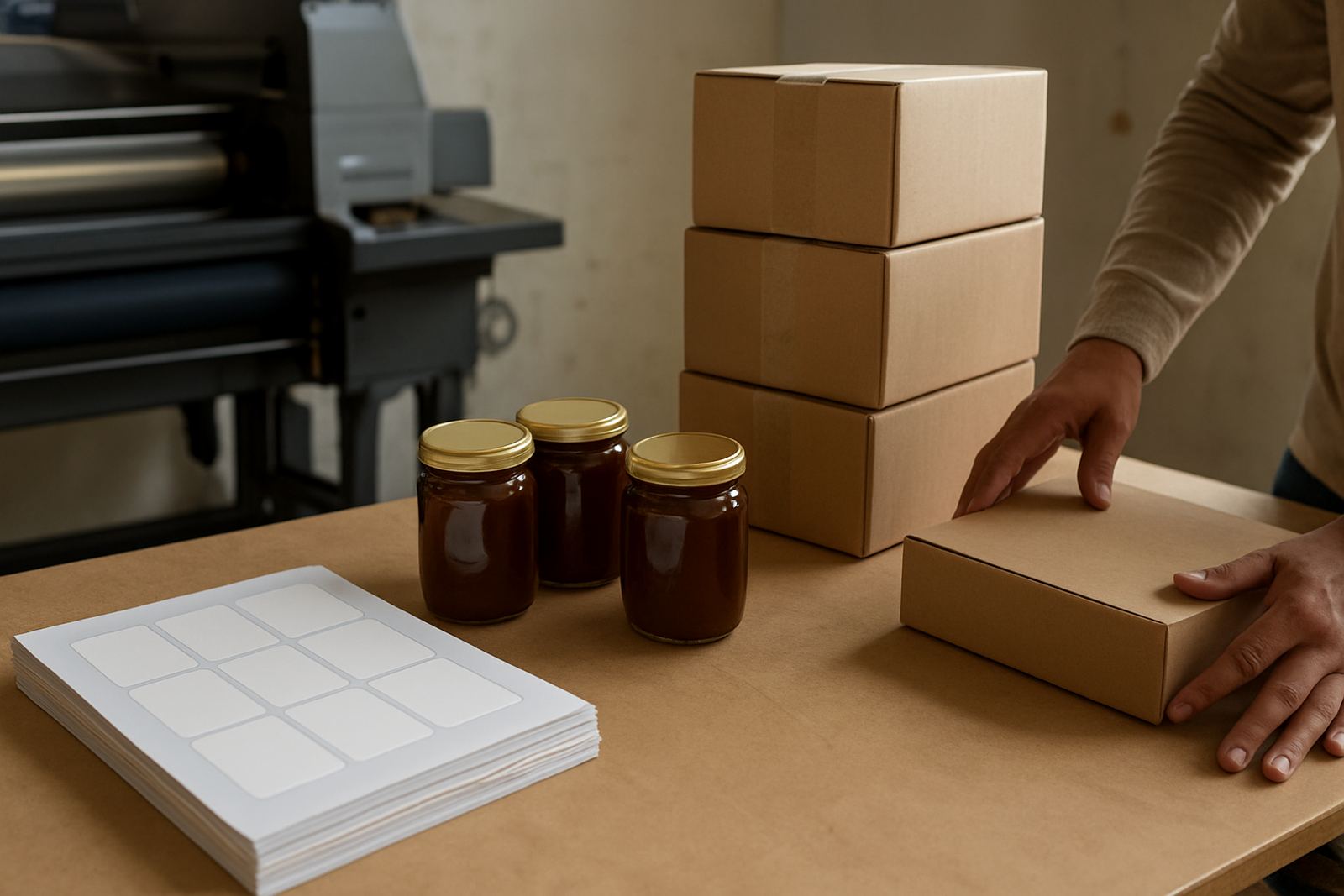
We also adjusted the label sizes to suit the way the team actually handles stock. If a label is too small, workers spend more time peeling and placing it. If it is too large, it wastes material and can lift on curved packs. For this Westonaria run, we kept the shapes practical and the margins balanced, which helped the sheets feed properly and made cutting quicker at the end of the run.
- Artwork redraws for cleaner text flow
- Print ready artwork prepared for sheet output
- Proofing updates before print approval
- Size adjustments to reduce waste and improve handling
Printing for local packing conditions
Sheet labels need more than a neat design. They must hold up in real conditions, especially where boxes are stacked, packs are handled often and the room may be hot or dusty. In Westonaria, many small operations work with basic packing tables and a lot of manual sorting, so we chose a print approach that gives crisp detail and steady colour without slowing the job down. The labels were printed for short-run use and checked for consistency from sheet to sheet.
We paid attention to edge finish and adhesive placement so the labels would stay usable once stored and then applied later in the week. The client also needed some stock-marking sheets that could be kept aside for internal use, so the final set had a simple structure that made it easy to separate product labels from internal reference labels. That saved time on the floor and reduced mix-ups, which is often where small jobs lose time and money.
- Digital print for quick turnaround and smaller quantities
- Consistent colour and text across repeated sheets
- Practical adhesive for packed products and stock marking
- Separate label groups for different uses on the same run
Timeline, proofing and delivery timing
The job moved from brief to first proof within the first week, with approval changes handled before the full print run started. The client needed speed but not rush, so we kept the process tight and realistic. Week one covered artwork cleanup, sizing and proofing. Week two covered printing, finishing and final checks. That gave the client enough time to review wording and batch details without interrupting their own packing schedule.
Once the approved version was locked in, we completed the sheet labels and had them ready for collection on the agreed timeline. For a West Rand business, this kind of turnaround matters because product runs can shift quickly and storage space is often limited. The client did not want excess stock lying around, and frankly that was the right call. Short-run print should stay close to actual demand.
- Week 1: layout cleanup and proofing
- Week 2: print run, finishing and final quality check
- Fast turnaround for changing batch quantities
- Collection arranged through the enquiry form process
Results for the packing table and stock room
The finished label sheets gave the client a neater, more organised way to mark products and manage stock. The print was easy to read, the labels cut cleanly and the sheet format made storage simple. Because the quantities were short-run, the client avoided holding too much unused material, which is useful for businesses that are still refining pack sizes or changing product lines through the year.
There was also a small but important gain in consistency. Once the layout was fixed, the team could reprint the same format without reworking the design each time. That means less back-and-forth for the client and fewer delays when stock is moving. For a Westonaria operation, that sort of practical order helps more than a flashy finish ever would.
- Cleaner product presentation for local resale
- Better stock separation on busy shelves and in storage
- Less waste from over-ordering labels
- Reusable layout for repeat print jobs
What we would do again on a repeat order
If this same Westonaria client came back with a new batch tomorrow, we would follow the same approach. Keep the artwork simple, confirm the label count against real packing volume, and proof the variable text before print. That method works well for labels because the details tend to change more often than the base layout. It also keeps the cost sensible, which matters when a business is watching margins on every pack.
We would also keep the file structure split by use, so product labels, stock markers and any internal reference sheets stay easy to identify. That makes reordering quicker and helps the client avoid mistakes when a new team member is handling the sheets. In short, the job works best when the print side supports the packing side rather than asking the packing team to work around the print.
- Reuse the approved layout for future batches
- Keep variable details separate for faster updates
- Review quantities against actual weekly or monthly use
- Use the same sheet setup for easier sorting and filing
Who this project suited
This project suited a small to mid-sized Westonaria business that packs goods locally and needs labels without the delays of large commercial production. It also suits retailers, food packers, wholesalers and workshop suppliers who need a neat sheet format for product names, barcodes, stock codes or batch details. The key is not size alone, but how often the labels must change and how quickly the team needs them in hand.
At @Print we handle that kind of work for West Rand businesses from our Randfontein CBD base, with same-day digital print available where timing allows. For Westonaria clients, the practical route is usually the best one: accurate copy, clear layout and a finish that stands up to day to day use.
Key facts
| Project type | Short-run sheet labels |
|---|---|
| Client town | Westonaria |
| Use case | Packed products and stock marking |
| Turnaround | 2 weeks from brief to completion |
| Print method | Digital print on sheet stock |
| Service scope | Artwork redraws, proofing updates and print ready artwork |