
Start with how your team actually uses the book
Before you choose a format, think about where the book will live and who will write in it. A contractor on site in Krugersdorp needs a different setup from a shop counter in Randfontein CBD. If the book is being filled in with one hand while a customer waits, the page layout must be simple, with space for the job description, amount, date and signature.
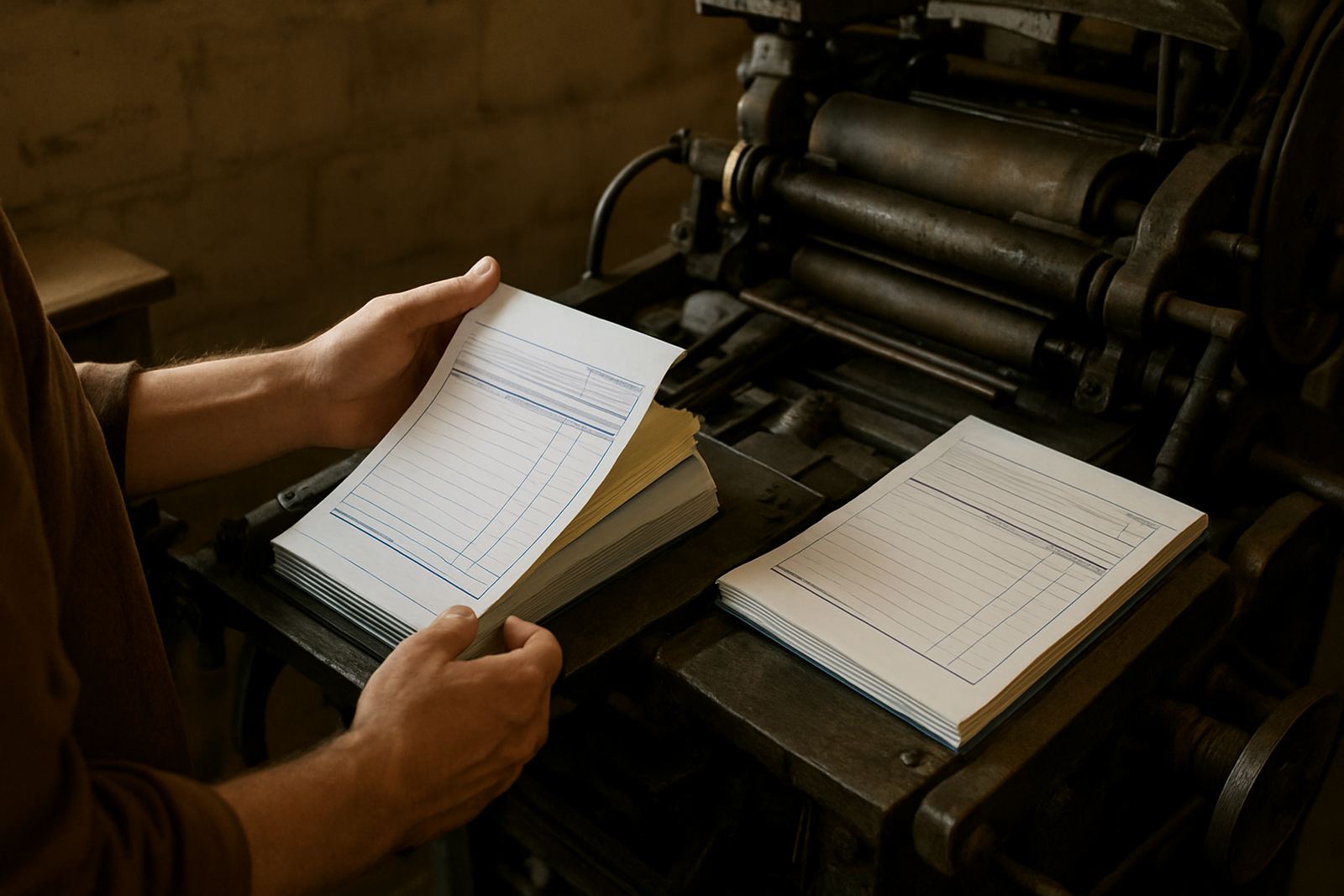
For many West Rand businesses, invoice books still earn their keep because they work during load-shedding, at sites with weak signal and in places where a quick handwritten record is easier than opening a laptop. That is why the paper, binding and numbering all matter, not just the cover. A book that tears badly or smudges when pressure is applied by carbonless copies will cause problems later.
- Use a compact size if staff move between sites or vehicles.
- Choose a larger format if you need more line items or notes.
- Allow space for VAT, deposit amounts and delivery notes where needed.
- Keep the layout plain so the important details stand out at a glance.
Pick the page format that matches the job
Invoice books usually come in formats such as portrait or landscape, with duplicate or triplicate sets inside. Portrait works well when you need a traditional invoice look with customer details at the top and items beneath. Landscape can help when you need more room across the page for multiple line items, product sizes or labour charges. For a business that sells materials, repairs or service call outs, landscape often feels less cramped.
If your invoices are mostly short, a smaller page format may be enough. If you quote, invoice and add notes on the same page, go bigger. The goal is not to fill the page with empty space, but to make sure your staff do not squeeze figures into corners. A cramped invoice is harder to read and easier to dispute later on.
- A5 is neat for mobile use and quick transactions.
- A4 gives more room for details, totals and conditions.
- Duplicate sets suit basic proof of sale and customer copies.
- Triplicate sets help if accounts, the client and the driver all need a copy.
How many copies do you really need
The number of copies should be based on your workflow, not just habit. Two copies are enough for many service businesses: one for the customer and one for your records. Three copies make sense when a field team, office admin and client each need proof of the same sale. If the wrong copy goes missing, you can lose time chasing paperwork and that slows cash flow.
Think about who signs first, who keeps the carbon copy and where the signed original ends up. In Randfontein and nearby areas like Westonaria and Roodepoort, many businesses still close off jobs at the end of the day and hand paperwork to the office later. In that case, a clear copy system avoids confusion. Ask yourself whether the book needs loose counterfoils, perforated pages or a stitched binding that stays together under regular use.
It is also worth checking how strongly the copies show through. If the pressure mark is weak, the copy may be unreadable by the time it gets to the office. If the paper is too thin, ink can show through and make the next page messy. Small choices like this can make the difference between a tidy filing system and a pile of doubtful records.
Numbering and record control matter more than people think
Sequential numbering is one of the main reasons businesses still use invoice books. Every page has a place in the sequence, so missing numbers are easy to spot. That helps with internal control and makes it simpler to match jobs against cash received. If you work with municipal clients, contractors or regular account customers, numbered invoices give your paperwork a cleaner trail.
There are a few ways to manage numbering. Some businesses want the number printed into the book already. Others prefer a system that starts from a chosen number for a new batch or financial year. The best option depends on your filing method and how often books are issued to different staff members. If more than one person carries books, keep a register of who took which book and when. It sounds basic but it saves admin later, especially when numbers are missing.
For teams that work in the field, a numbered book also reduces arguments about whether a job was billed or not. The number becomes the reference point when a client phones back about an amount or service detail. That is why the numbering should be clean and easy to read, not tiny and squeezed into the corner.
Layout choices that make invoicing faster at the counter
A good invoice layout should guide the eye in the same order your staff work. Start with the business name, then the client details, then the date, invoice number and item lines. Keep the rate, quantity and total columns clearly separated. If the book is used for delivery work, leave space for vehicle details or route notes. If you supply services, add a short line for labour or call out charges.
Do not overload the page with too many boxes. Every extra line slows writing and increases the chance of mistakes. A clean layout is especially useful when a team member is busy, the power is off or the customer is standing at the counter waiting. One or two carefully placed notes can be more useful than a page full of tiny labels. Also make sure the writing area is large enough for common entries like product codes, unit sizes and special instructions.
- Leave enough room for a full client name and contact person.
- Include a clear total line and space for VAT if needed.
- Add conditions only if they are short and relevant.
- Use bold headings that are easy to scan quickly.
A Randfontein example: what a practical invoice book looks like
Picture a local business in Greenhills that supplies electrical fittings and sends a driver through to Mogale City and Roodepoort each morning. The office needs a duplicate invoice book with numbered pages, a medium size that fits on the counter and enough room for item codes, quantities and delivery notes. The driver needs the customer copy to stay legible after a day in the bakkie, while the office keeps the second copy for filing and reconciliation.
In that case, a simple portrait book may work if the items are short, but a landscape book could be better if the business often writes multiple line items. The team may also want a proofing check before the first run so the wording on the cover, invoice title and contact fields are correct. If the business trades across several areas such as Toekomsrus, Mohlakeng and Westonaria, the same format can be used everywhere so the records stay consistent.
That sort of practical setup saves time at month end. It also helps new staff get the hang of the process quickly, without having to ask where to write every detail. When the book is well planned, the whole job feels simpler and the admin stays under control.
Before you place the order, check these final points
Once you know the format, copies and numbering style, check the small details before printing. One missed field can make a whole batch less useful. Make sure the business name is correct, the layout leaves enough space for your most common entries and the numbering starts where you need it to. If your team uses different invoice books for different branches or service types, keep the layouts close enough that no one gets confused.
It also helps to think about storage. Books should sit flat, stay dry and survive ordinary handling in an office, workshop or vehicle. In humid coastal conditions paper can suffer, but even inland, dust and rough treatment can make a clean book look tired fast. Choose a finish and paper weight that suits the way your team uses it. A small planning session now can prevent a lot of backtracking later, and that is worth the effort.
- Confirm the exact page size before printing.
- Decide whether you need duplicate or triplicate sets.
- Check numbering, cover wording and any required fields.
- Match the book to how staff invoice in the field or at the counter.
When the right invoice book makes all the difference
The best invoice book is the one your team can use quickly, read clearly and file without confusion. It should fit the way you work, whether that is at a Randfontein shop counter, on a construction site, or from a vehicle moving between the West Rand towns. If the page format, copies and numbering are chosen carefully, the book becomes a proper business tool rather than just another pad of paper.
That is why the decision is worth a bit of thought before ordering. Once the details are right, the rest becomes easier. The staff write faster, the customer copy stays clear and the office has a cleaner trail for payments and records.