
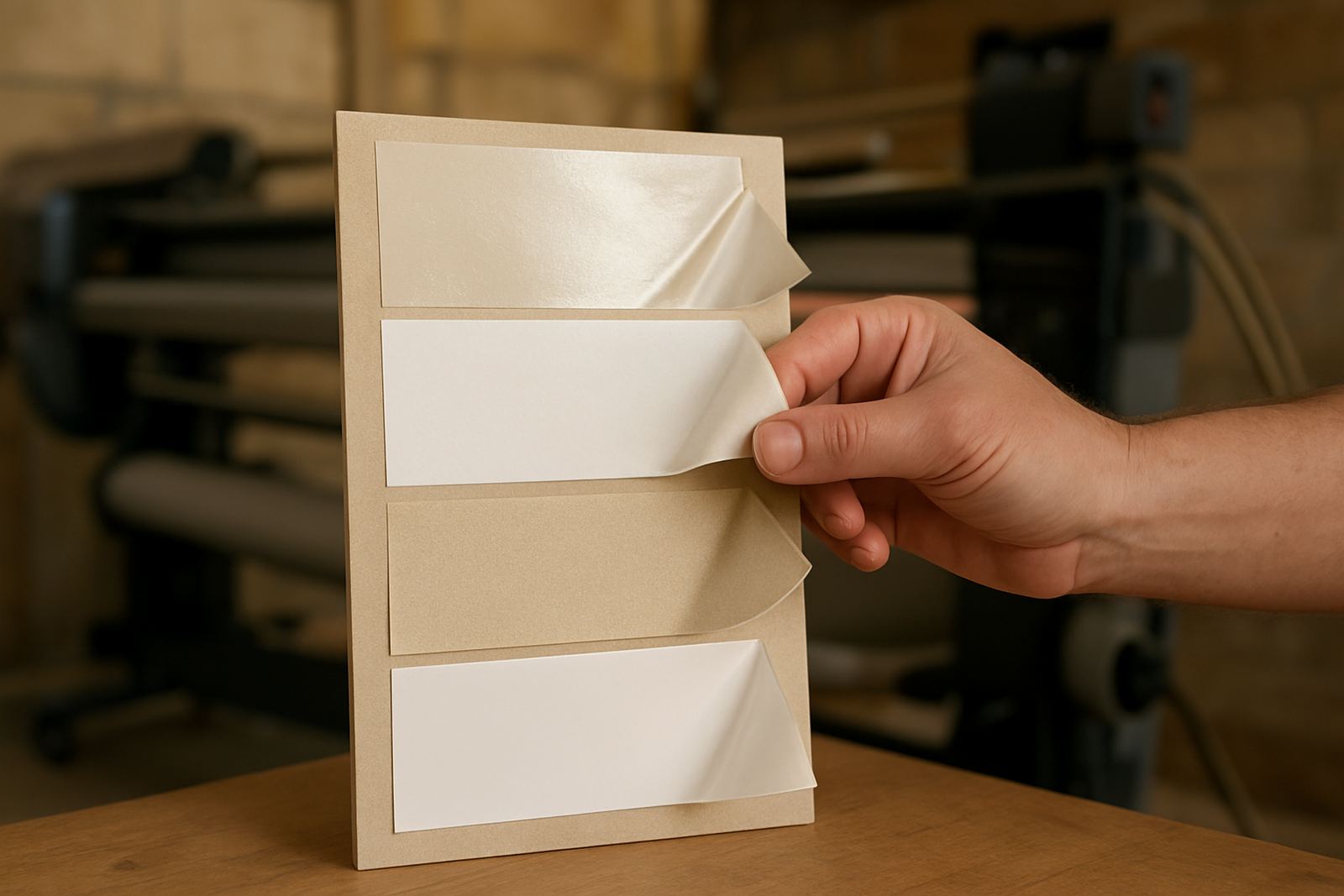
Start With the Job, Not the Sticker Type
Before anyone asks about gloss or matt, it helps to pin down the job. A sticker for a courier parcel, a shop promotion, a bottle label and a machinery warning label all need different materials. Some are meant to come off after a short run, while others must survive handling, sunlight and cleaning.
In Randfontein CBD and nearby areas like Mohlakeng, Greenhills and Toekomsrus, businesses often need stickers for fast-moving work. That can mean a batch of price labels for stock, a set of branding stickers for event bags or a simple window promotion for a special. The right material depends on whether the sticker must last one day, one month or longer.
A practical rule is simple: if the sticker will face moisture, friction or outdoor exposure, do not start with paper unless the use is very controlled.
Paper Stickers for Short Runs and Low-Cost Labeling
Paper stickers are the most cost-friendly option for many indoor uses. They work well for packaging seals, temporary pricing, envelope labels and simple promotional handouts. They print clearly and can give a neat finish for short runs where the sticker will not be touched too often.
They are less suited to damp conditions, heavy handling or anything that may be left in a vehicle or storeroom with temperature changes. In humid conditions paper can lift at the corners, and once moisture gets in the edge starts to weaken. That makes paper a poor choice for cold drinks, bathroom labels or outdoor use.
- Best for indoor use only
- Good for short-term promotions and packaging
- More affordable for larger quantities
- Not ideal for wet hands, rain or rough handling
For a small bakery in Westonaria, for example, paper stickers can be perfect for box seals and flavour labels, but not for items that may sit in a fridge or travel in a delivery bag for long periods.
Vinyl Stickers When Durability Matters
Vinyl is the go-to choice when the sticker must work harder. It handles handling better than paper and is usually used where durability matters, such as vehicle decals, outdoor notices, equipment labels, shopfront promotions and branded stickers for bottles or tubs.
Vinyl also suits curved surfaces better than stiff paper. If you are sticking on plastic containers, jars or slightly rounded packaging, vinyl is often the safer option. It keeps its shape better and is less likely to tear during application.
There are two common things to watch for. First, the adhesive must suit the surface. Second, the print itself needs the right finish for the job. A sticker on a smooth window is one thing, while a label going onto a dusty container in a workshop is another. Clean the surface properly and press down from one edge to avoid bubbles.
- Better for indoor and outdoor use
- Handles handling and cleaning better than paper
- Useful for curved or slightly uneven surfaces
- More suitable for branded product labels and signage
Laminated Stickers for Extra Protection
Lamination adds a protective layer over the printed sticker. That layer helps with scuffing, colour fade and light moisture, which is why laminated stickers are often chosen for products that will be touched often or kept in exposed areas. It also gives a more finished look, which matters on premium packaging and branded giveaways.
For businesses in Krugersdorp, Roodepoort and Mogale City, laminated stickers are often worth the extra spend when the label is part of the customer experience. A laminated label on a jar, folder or retail box tends to hold up better over time, especially where stock moves through several hands before it reaches the customer.
Lamination is not a fix for every problem though. If the sticker will be used on a dirty, oily or very textured surface, the surface prep still matters. The best material can fail if it is applied badly or onto a surface with dust, grease or loose paint.
- Extra protection from scuffs and light moisture
- Good for frequent handling and premium packaging
- Helps colours stay cleaner for longer
- Best applied to clean, dry surfaces
Finish Choices That Change the Look and Use
Beyond the base material, the finish changes how a sticker looks and performs. Gloss finishes reflect light and suit bright branding. Matt finishes reduce glare and can look more understated on product labels, folders or office use. Clear stickers can work well when the background should show through, while white stock gives stronger colour contrast.
If the sticker is for a menu update or price change, a matt finish is often easier to read under indoor lighting. If it is for a retail window special, gloss may stand out better from across the street. These small choices affect how customers notice the message.
Another point is size. A 40 mm round sticker for sealing a small parcel is very different from a 200 mm sticker for a window promotion. Bigger stickers need stronger application care and in some cases a more durable material because the surface area catches more wear.
How West Rand Conditions Affect Sticker Choice
Local conditions matter more than many people think. In Randfontein and nearby West Rand areas, stickers may be stored in hot rooms, transported in bakkies, or left near windows where sun and heat can weaken adhesive over time. Load-shedding can also mean stock sits for longer in less controlled conditions, so material choice should allow for some storage time.
If a business is near the highway, works with delivery vehicles or operates from a site with dust, choose a sticker that can cope with a bit of grime. For shops in Greenhills or Toekomsrus, we often see the need for labels that still look clean after handling during busy trading hours. That is where vinyl and laminated options usually make more sense than paper.
One practical local example: a takeaway in Randfontein CBD may use paper labels for same-day packaging, but switch to vinyl or laminated stickers for drinks, containers and counter promotions. That mix keeps costs under control without sacrificing presentation where it matters most.
Ask These Questions Before You Order
Before placing an order, it helps to answer a few straightforward questions. The clearer the brief, the better the sticker material choice and the fewer costly reprints later.
- Will the sticker be used indoors or outdoors?
- Will it touch water, oil or cleaning products?
- How long must it last, a day, a month or longer?
- Will it go on glass, plastic, cardboard or a curved surface?
- Does the sticker need a premium look or just a practical label?
Once those points are clear, the right material usually becomes obvious. For many West Rand businesses, the answer is not one sticker type for everything but a simple mix of paper, vinyl and laminated options used for different jobs.